
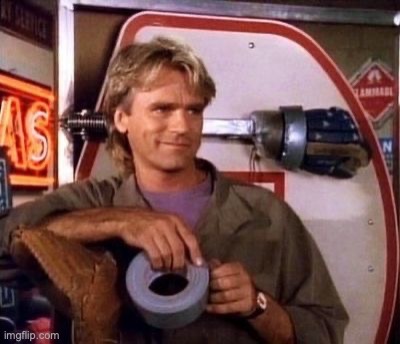
Why "MacGyvering It" Isn't a Workforce Strategy
Published on April 15, 2026 | Workforce Development General InterestIf you grew up watching MacGyver, you know the formula: give him a paperclip, a Swiss Army knife, some chewing gum, and—of course—duct tape, and he’ll defuse a bomb or escape a locked room just in time. Week after week, he proved that with enough ingenuity and whatever happened to be lying around, almost any problem could be solved.
A lot of organizations operate the same way. Faced with shifting demands, new technologies, and ongoing workforce challenges, they rely on quick fixes. The project gets done. The issue gets resolved. The day is saved. And there is something satisfying about that.
But here’s the problem: running an organization on duct tape solutions eventually starts to show.
Constantly “MacGyvering it” means you’re always reacting. You’re solving problems only after they appear instead of preparing for them ahead of time. Adaptability is valuable, but it’s not a long term strategy for growth.
Organizations that prioritize advancing skills take a very different approach. They invest in upskilling before it becomes urgent. They reskill employees as roles evolve. They create clear pathways for growth. Instead of scrambling for last?minute fixes, they build a workforce equipped to meet challenges before they arise.
In industries where change is constant, that difference is huge. Companies that focus on employee development improve retention, strengthen engagement, and build teams that can adapt without reinventing the wheel every time something shifts.
There will always be moments that call for quick thinking and creative problem solving. But those moments should be the exception—not the operating model.
Duct tape might hold things together for now, but a strong workforce isn’t built on temporary fixes. It’s built through intentional investment, continuous learning, and a clear focus on what’s next.
Want to learn more? Connect with us to explore programs and training strategies that work for you and your employees. Contact us at workforcedevelopment@sinclair.edu or 937-252-9787.